01The story
One table becomes the whole world.
Small Hands of Zonaria is a short live-action film set in the fictional country of Zonaria, a place that feels invented only by name. It follows Ade, a twelve-year-old boy whose whole world has been narrowed down to one thing: his school table.
When Ade accidentally breaks the table, he is told that he must replace it before he can return to class. The cost of a new one is more than he can find and more than his mother can afford. What begins as a simple search for a table slowly becomes something much larger.
02The survival mind
What disappears when the immediate need becomes everything?
The film is interested in the ‘survival mind’: what happens when poverty, fear, punishment and neglect narrow a person’s world until only the immediate need remains. Ade becomes a mirror. His table is more than furniture. It is dignity, belonging, education and the fragile proof that he still has a place in the world.
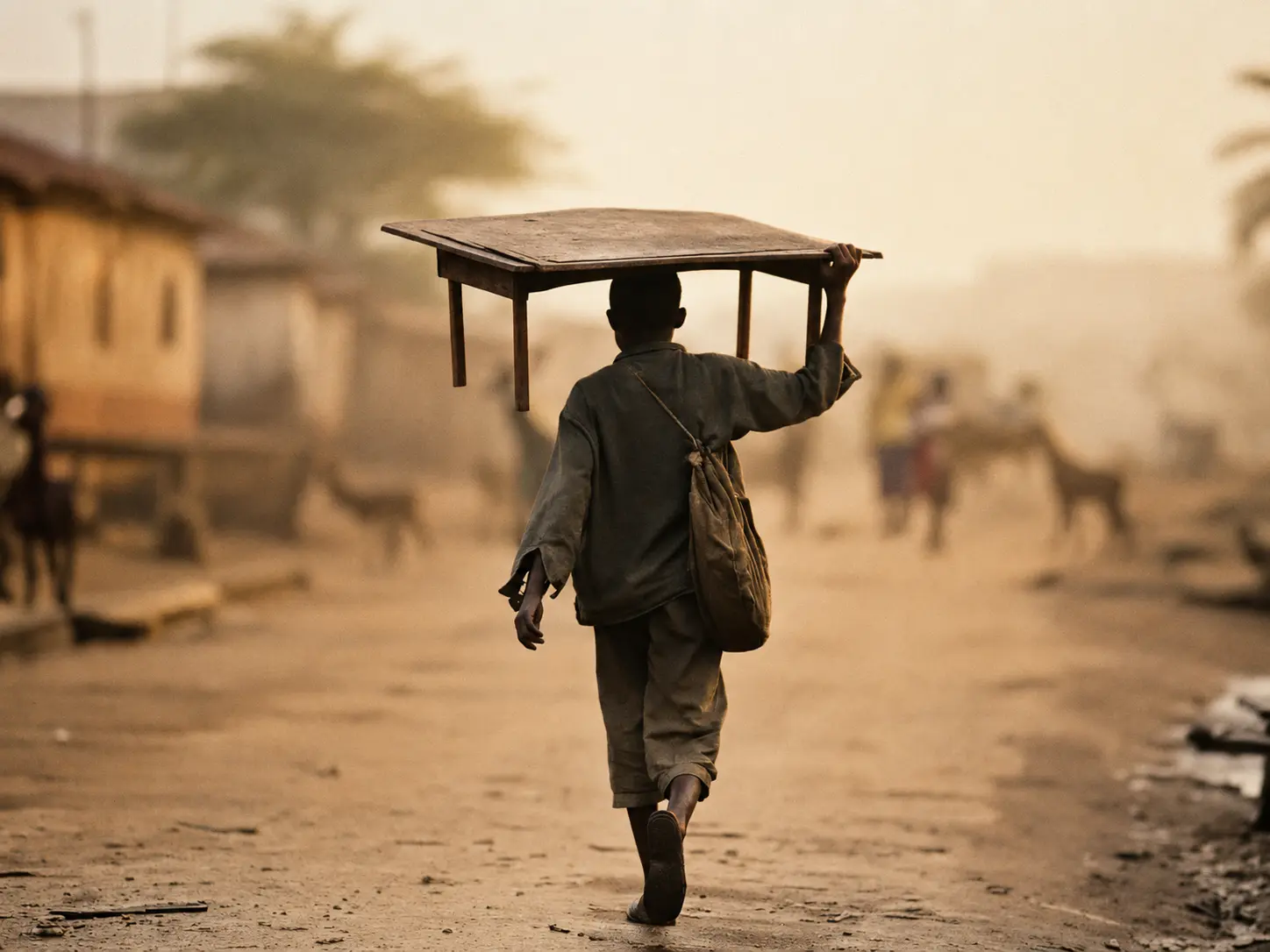
The first image I ever had for the film was a child carrying a table on his head. At first, I thought the story was about poverty. The longer I sat with it, the more I realised it was about what survival does to people, how a society can become so consumed by immediate needs that everything else begins to disappear from view: the children, the future, even ourselves.
03Visual language
The camera stays inside a child’s restricted attention.
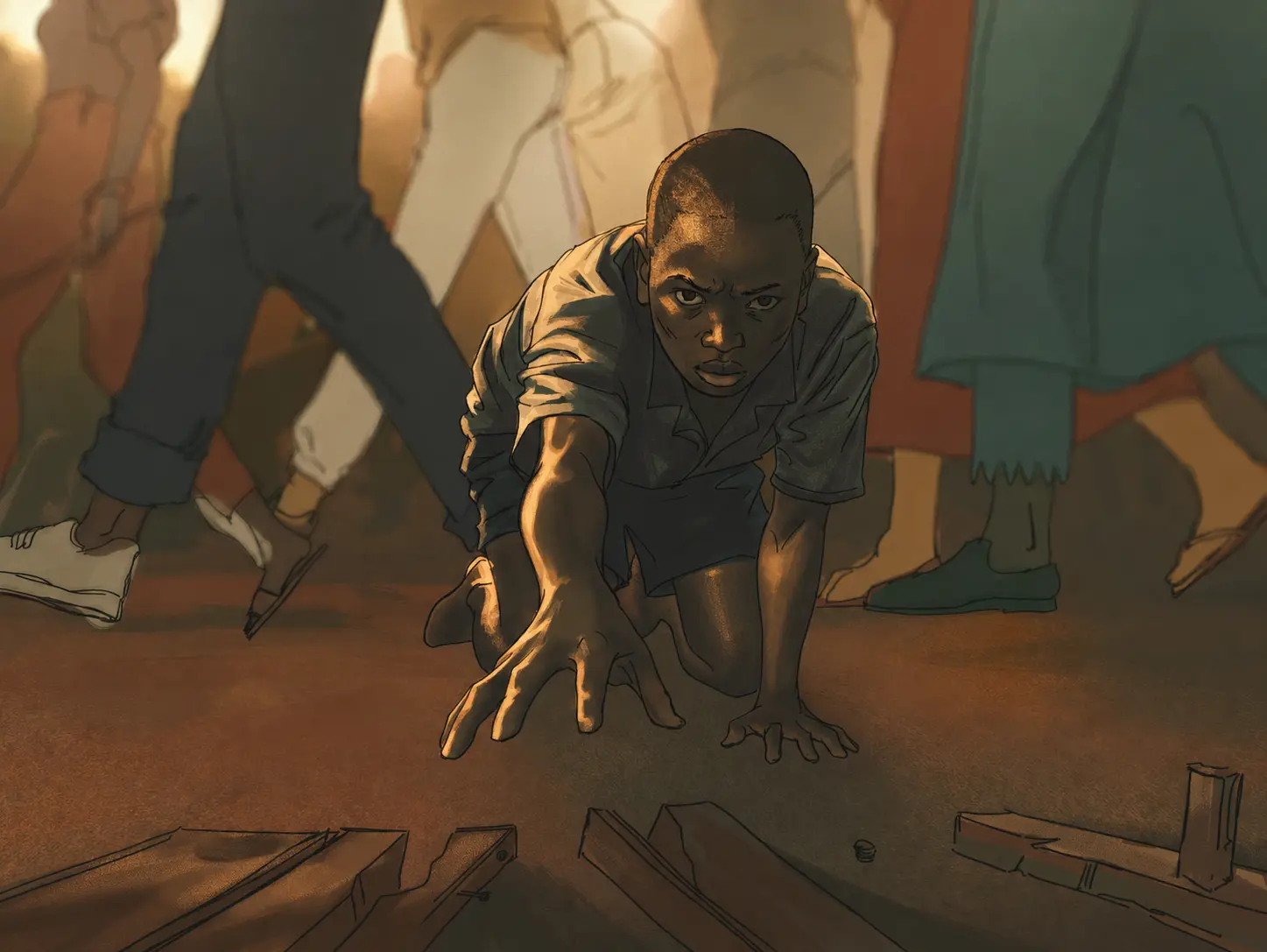
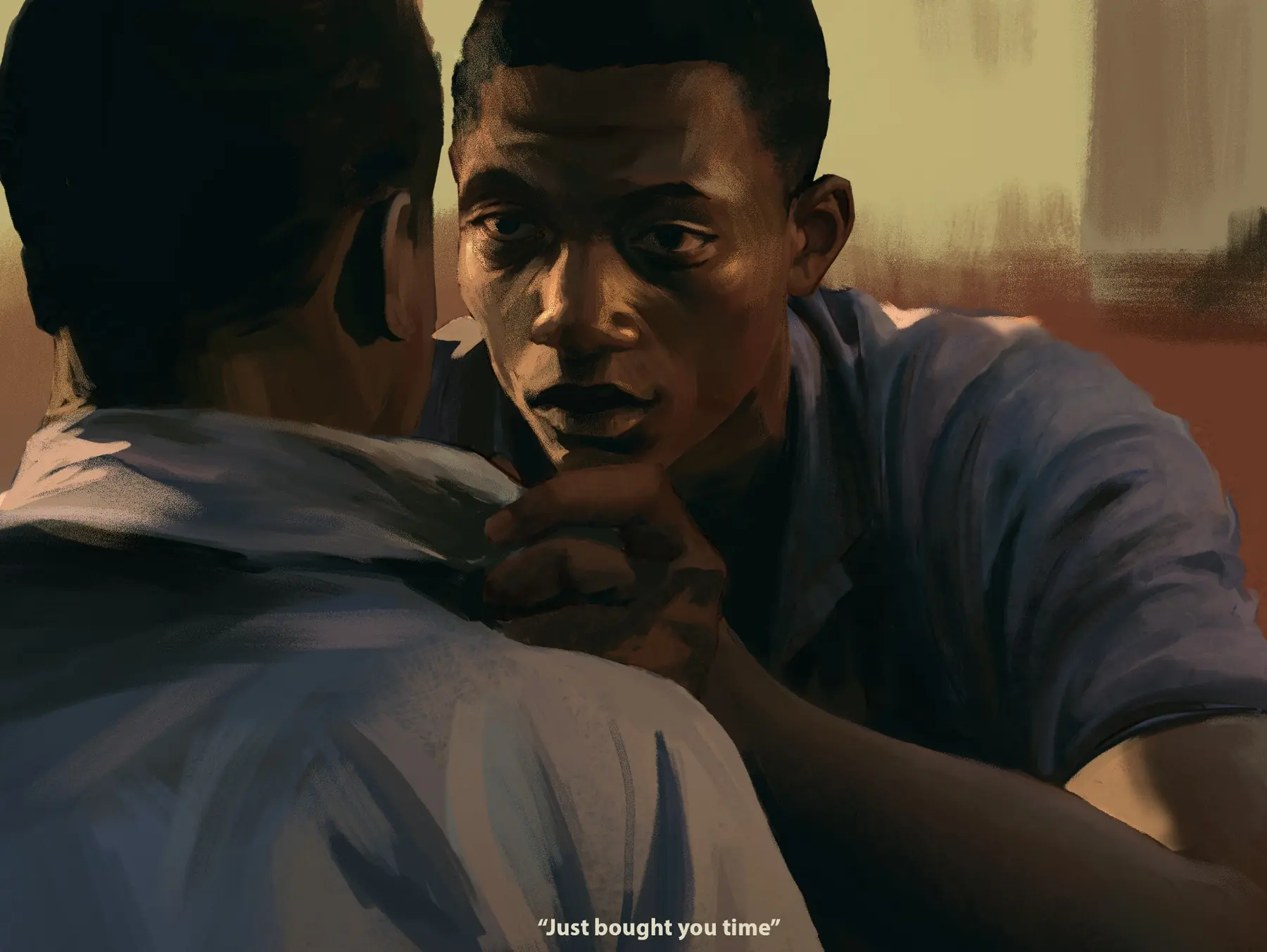
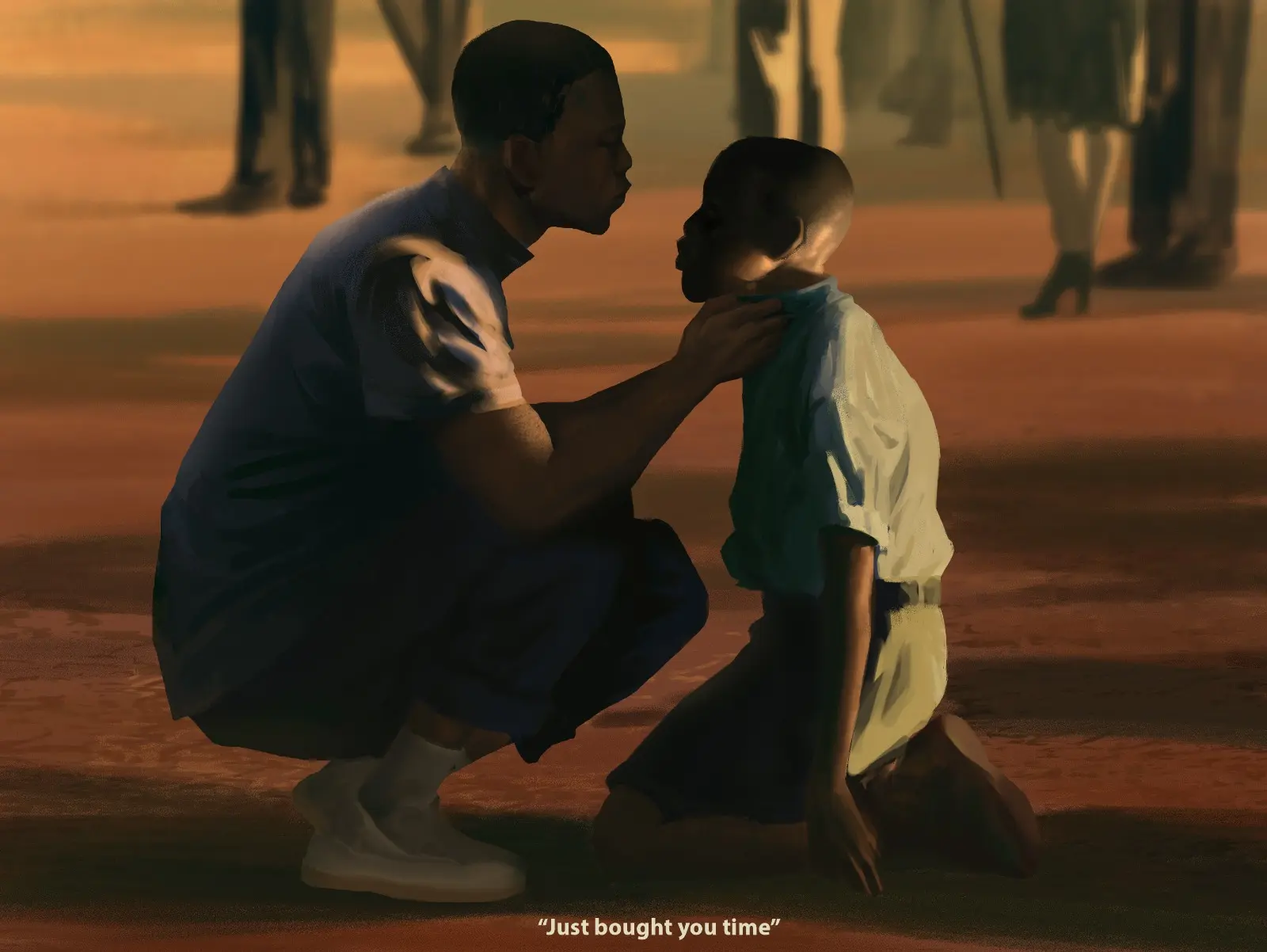
Visually, the film stays close to Ade’s perspective. The camera sits at the height of a child. Adults often appear as hands, shoes, uniforms, voices and bodies cut off by the frame.
Violence is mostly held outside full view. We hear it, feel it and see its effects, but the film refuses to turn suffering into spectacle. The audience is asked to understand how a child can walk past horror because his own small emergency has become the whole world.
04What the film asks
Children become casualties of systems they did not create.
When government fails, poverty strips away dignity and authority chooses punishment over understanding, children are forced to grow up too quickly, often in dangerous ways. Their rebellion, anger or defiance may shock society, but rarely do we pause to examine what pushed them there.
This is a deeply human story about the quiet violence children endure in systems that demand obedience but offer no mercy: children kidnapped and tortured, homeless and sick, left in impossible conditions to fend for themselves. Children.